
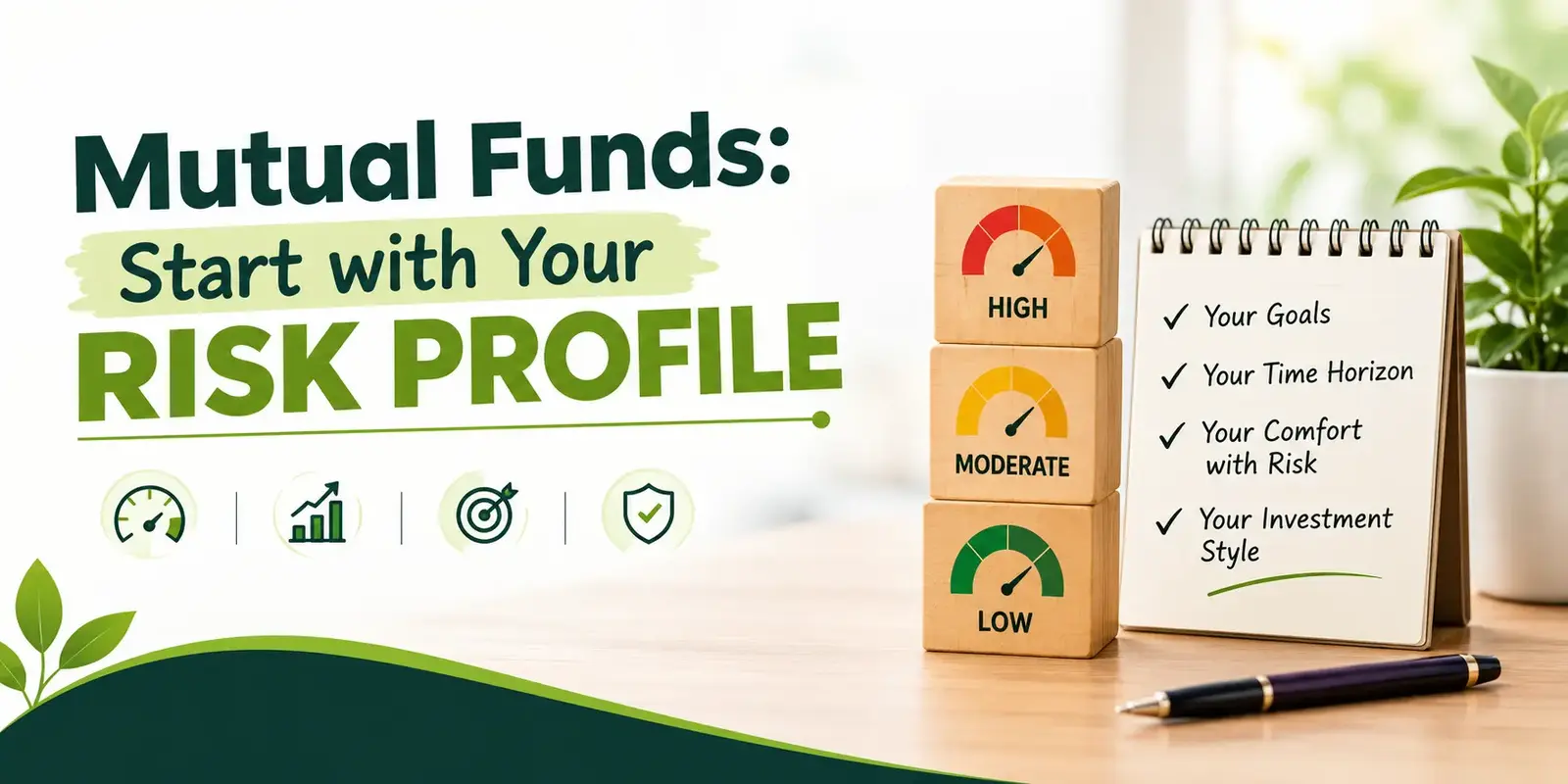
Mutual Funds Sahi Hai, But Where Should You Start? Understand Your Risk Profile First
🚨 Before You Choose a Mutual Fund or Start a SIP, Know Your Risk Profile!
A few days ago, I was travelling with family friends to a religious place. Between the conversations, laughter, and time spent together, it turned out to be a lovely trip.
On our way back, one of my friends asked, “Piyush, what exactly do you do?”
“I run My Niveshak in New Palasia, Indore. I help people plan their investments around their financial goals,” I replied.
He looked curious. “What kind of investments do you mean?”
We started talking about mutual funds, insurance, and the different financial needs families have.
Then he said something that stayed with me.
“Piyush Ji, I have LIC, I have health insurance, and I regularly invest in fixed deposits. But I have never invested in mutual funds. I have heard ‘Mutual Funds Sahi Hai’ on television, but how do I start? And where?”
It was an honest question. He had been saving responsibly for years. Mutual funds were simply unfamiliar territory.
“Let’s begin with your risk profile,” I told him.
“Risk Profile? What Does That Mean?”

It can sound like a technical term, but risk profiling starts with a few practical questions.
What are you saving for? When will you need the money? How much uncertainty can your finances handle? And how would you feel if the value of your investment fell?
Before choosing a mutual fund or starting a SIP, these answers help us understand what may be suitable for you.
I explained it to him this way:
“Suppose you and I invest the same amount in the same fund. If its value falls, you might lose sleep while I remain comfortable. Alternatively, I might feel confident about taking risks, but have expenses coming up that make those risks unsuitable for me.”
The investment is the same. Our situations are different.
That is why a useful risk assessment looks at three things: risk capacity, risk tolerance, and the returns your goals require.
1. Risk Capacity: Can Your Finances Handle a Setback?
Risk capacity is your financial ability to absorb a loss without affecting essential expenses or important goals.
Think about your income, EMIs, dependants, emergency savings, and existing investments. Then ask: When will I need this money?
Money needed for your child’s fees next year serves a different purpose from money being set aside for retirement twenty years from now.
A longer investment horizon generally gives you more time to navigate market fluctuations, although it does not guarantee recovery or returns.
Your age matters, but age alone cannot tell the whole story. Two people of the same age may have very different responsibilities.
2. Risk Tolerance: How Would You Feel When the Value Falls?
This is the emotional side of investing.
Imagine investing ₹5 lakh and later seeing its value fall to ₹4 lakh.
Would you stay calm and review the situation? Would you worry every day? Or would you want to withdraw immediately?
There is no benefit in giving a “brave” answer to a risk-profiling questionnaire. Honest answers are much more useful.
It is easy to feel comfortable with risk when markets are rising. A falling market can reveal how much uncertainty you can actually live with.
3. Risk Need: What Does Your Goal Require?
The third part is understanding the growth your money would need to achieve your financial goal.
For example, a retirement goal depends on how much you have today, how much you can invest, and how many years remain.
However, needing a higher return does not mean you can safely take a higher risk.
If the numbers do not align with your financial capacity or comfort level, we may need to discuss saving more, allowing more time, or adjusting the goal. Taking extra risk cannot guarantee that a shortfall will disappear.
“So, Am I Conservative, Moderate, or Aggressive?”
These are three common ways to describe an investor’s risk profile.
A conservative investor usually places greater importance on preserving capital and limiting fluctuations. They may be uncomfortable with substantial falls in value and willing to accept lower growth potential. However, a conservative approach does not make every investment risk-free.
A moderate investor seeks a balance between stability and growth. They can accept some fluctuations, provided the overall investment mix remains suitable for their needs.
An aggressive investor has the capacity and willingness to accept larger fluctuations while pursuing long-term growth. Higher risk also brings the possibility of larger losses; it does not guarantee higher returns.
These descriptions are a starting point. The next step is connecting the profile with actual goals, timelines, and investment choices.
“But I Already Have LIC, Health Insurance, and FDs. Isn’t That Enough?”
This is a question worth discussing.
Life insurance, health insurance, and fixed deposits can each serve useful purposes. Whether your existing arrangements are sufficient depends on your coverage, savings, responsibilities, and goals.
Adding a mutual fund should have a clear purpose too.
Are you investing for retirement? Your child’s education? A future home? Or building wealth over a longer period?
Goal-based financial planning helps put those questions in order. Once the purpose and timeline are clear, it becomes easier to consider an appropriate mix of investments.
SEBI’s investor guidance also highlights financial goals, investment horizon, and risk appetite as factors to consider before investing.
Your Risk Profile Will Change as Life Changes
The profile that suited you at 25 may need another look at 45.
You may have started a business, taken a home loan, become a parent, or moved closer to retirement. Your income may have increased—or become less predictable.
Each of these changes can affect how much risk you can afford and how comfortable you feel taking it.
Review your risk profile periodically, especially after a significant change in your circumstances. Your investments should continue to reflect the life you are living and the goals ahead of you.
Where Should a First-Time Mutual Fund Investor Begin?
Start with a conversation about yourself.
Write down what you want your money to achieve and when you will need it. Take an honest look at your income, commitments, and emergency savings. Then complete a risk assessment and discuss what the result means before selecting investments.
When evaluating a mutual fund, also look at its Risk meter, which indicates the scheme’s risk level. Your personal risk profile and a fund’s Risk meter describe different things, and both help inform the decision.
That was the starting point I suggested to my friend on our journey home.
He had already built the habit of saving. Now he wanted to understand his next step.
If you have also heard “Mutual Funds Sahi Hai” and wondered, “Where should I begin, and what would be right for me?”—begin by understanding your own needs and risk appetite.
Visit www.myniveshak.com to connect with My Niveshak, New Palasia, Indore, and ask about the risk-profiling exercise.
Bring your questions. You do not need to know the names of funds before starting the conversation.
Mutual fund investments are subject to market risks. Read all scheme-related documents carefully.